Books & Research
Books & Research
This page presents a selection of books and research works that I have published or contributed to throughout my research journey. These works cover a range of topics, including remote viewing, human perception, unusual phenomena, and environmental and geographical studies.
Some of these works were published in Arabic, while others were published in English. Several of them also explored unconventional research questions that I sought to examine through a scientific and analytical approach.
These publications represent part of my journey of research and exploration, reflecting the interests and questions that have occupied me through many years of study, observation, and analysis.
Behind every publication featured on this page lies a different journey. Some of these works took several months to complete, while others extended over several years due to the nature of the questions being investigated, the difficulty of obtaining suitable data, and the need to verify, analyze, and compare information from multiple sources. Some research projects also involved additional challenges related to limited data availability or restricted access to certain information, making the processes of research and analysis an integral part of the journey itself.
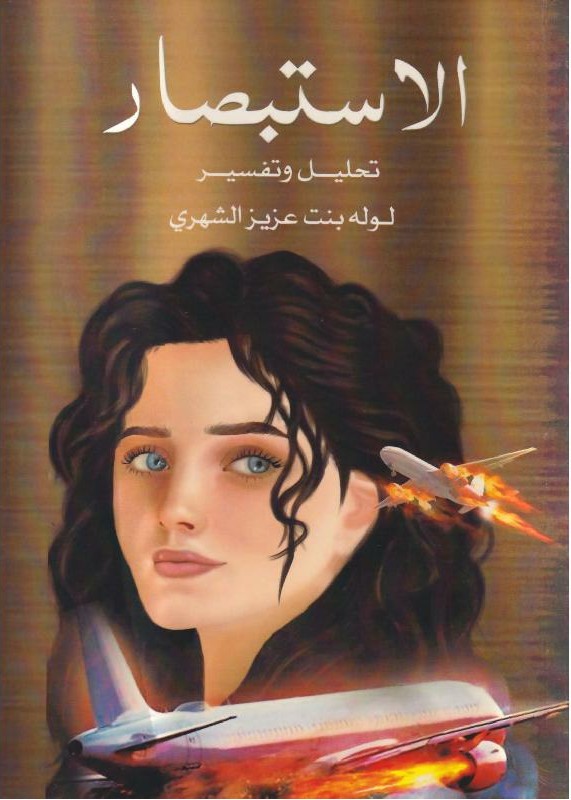
Remote Viewing: Analysis and Interpretation
This book emerged from years of reading, observation, and reflection on the subject of remote viewing. Rather than focusing on a single perspective, it brings together historical accounts, interpretations, research discussions, and questions that have accompanied the field for decades.
The book represents an early milestone in my journey to better understand remote viewing and the broader questions surrounding perception, consciousness, and human experience.
Available through Jarir Bookstore →Research Papers
The Academic Background of Scientific and Literary Disciplines in the Acceptance of Remote Viewing
This study examines the influence of psychological, demographic, and educational factors on the acceptance of remote viewing among students, graduates, and university staff across Arab universities.
The findings suggest that personal experiences and critical thinking play significant roles in shaping acceptance, while societal culture and social intelligence also contribute to how individuals perceive the subject. The research further explores differences between academic disciplines, educational levels, and Arab countries, providing insight into how cultural and academic backgrounds influence attitudes toward remote viewing and related phenomena
Read Research →Analytical Extrapolation of Land Surface Temperatures in Clairvoyantly Perceived Regions Using Remote Sensing: A Case Study of Moscow, Taif, Amman, and Abu Dhabi
This study investigates land surface temperature (LST) patterns in regions associated with reported clairvoyant perceptions using satellite-based remote sensing data. By analyzing temporal and spatial variations in LST across multiple locations, including Moscow, Taif, Amman, and Abu Dhabi, the research explores whether measurable thermal characteristics are associated with reported clairvoyance events.
The findings indicate that no significant thermal anomalies were detected during the reported events, and no statistically significant differences were observed between the central locations and their surrounding areas or between the days preceding and following the events. The study contributes to the exploration of unconventional research questions through the application of established remote sensing and spatial analysis methods.
Read Research →Spatial Analysis of the Distribution of Unidentified Aerial Phenomena (UAP) Sightings: An Analytical Study of Natural and Human Factors Using Spatial Analysis Methods
This study investigates the spatial distribution of Unidentified Aerial Phenomena (UAP) sightings using Geographic Information Systems (GIS) and advanced spatial analysis techniques. The research examines whether environmental characteristics, technological infrastructure, and human activities may influence the geographic concentration of reported sightings.
Through spatial distribution modeling, density analysis, and the integration of multiple geospatial datasets, the study found that UAP sightings exhibited clustered rather than random patterns. The findings suggest stronger associations with human-related activities, including technological and industrial sites, than with natural factors such as volcanic activity or terrain characteristics. The research contributes to understanding the spatial dimensions of reported UAP events and the factors that may influence their distribution.
Read Research →Detecting Changes in Land Cover Patterns within the Sabkhas of Rabigh, Saudi Arabia (2000–2022) Using Remote Sensing and Geographic Information Systems
This study employs remote sensing and Geographic Information Systems (GIS) techniques to monitor land-cover changes in the sabkhas of Rabigh, Saudi Arabia, over the period from 2000 to 2022. By analyzing multi-temporal satellite imagery, the research examines long-term environmental changes and patterns of land use within these coastal sabkha environments.
The findings reveal that while several sabkhas maintained their general barren characteristics, others experienced notable changes associated with urban expansion and shifts in land use. The study also identified relationships between changes in water distribution, urban development, and human activities. The research highlights the importance of sustainable environmental planning and the need to consider ongoing land-cover transformations in order to preserve ecological balance and support long-term land-use sustainability.
Read Research →Research in Progress
Prediction Validation Device During Writing
This upcoming research focuses on the development and experimental evaluation of a device designed to study predictive impressions during writing.
The study is part of an ongoing effort to investigate whether certain measurable patterns can help identify when a prediction or impression is more likely to be accurate before the event occurs.
Investigating the Relationship Between Clairvoyant Perception, Cloud-Penetrating Satellite Sensors, and Early Event Detection
This research emerged from findings reported in my previous study, Analytical Extrapolation of Land Surface Temperatures in Clairvoyantly Perceived Regions Using Remote Sensing.
The research explores whether satellite sensors capable of penetrating cloud cover may provide new opportunities for detecting environmental indicators associated with future natural or human-related events.
Questions about a publication, research collaboration, or academic inquiry are welcome.
Contact →